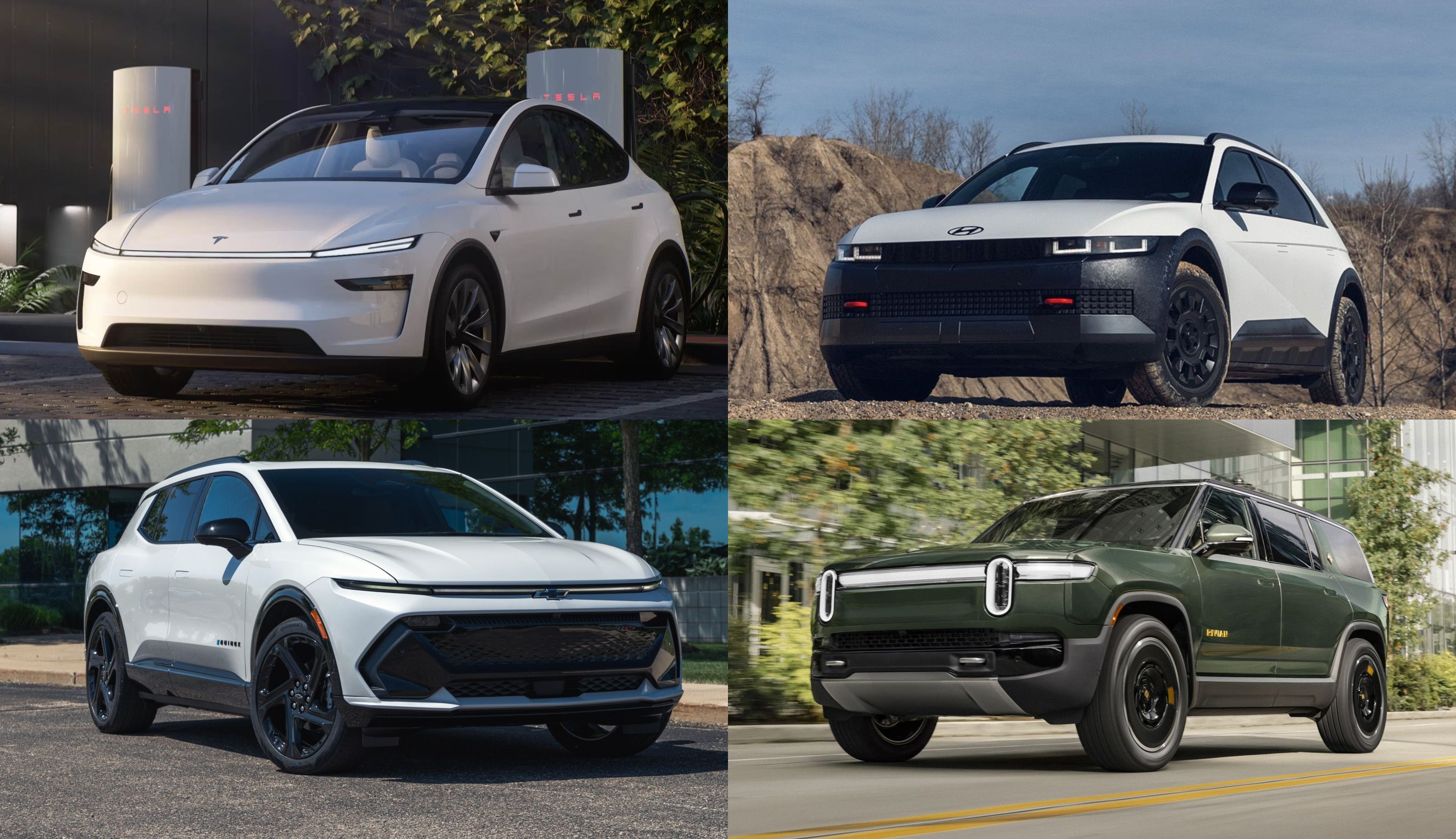
Cut through the EV hype. Our guide lists every automotive brand currently selling real, deliverable electric vehicles across the United States right now.
Trying to figure out which car brands are actually selling electric vehicles in America right now can feel overwhelming. New models seem to pop up every month, and legacy automakers are racing to catch up with the newer players. It's a landscape that's shifting faster than a Tesla Ludicrous Mode launch.
We get it. That's why we've put together this straightforward guide to cut through the noise. Forget the concept cars and distant promises—we're focusing on the EVs you can actually walk into a dealership and buy, or order online, in the United States today. Let's break down who's really in the game.
### The Obvious Leaders You Already Know
First, let's talk about the brands that immediately come to mind. Tesla is, of course, the 800-pound gorilla in the room. They pioneered the modern EV movement and have a sprawling Supercharger network that's hard to beat. Their lineup, from the Model 3 sedan to the Model X SUV, is entirely electric.
Then there's Rivian. This American startup made waves with its R1T electric pickup truck and R1S SUV, targeting the adventure crowd with impressive off-road specs and a unique design. They've proven it's possible to compete with the giants, though production challenges have been real.
### The Legacy Giants Playing Catch-Up
This is where it gets interesting. Almost every major traditional automaker has now thrown its hat into the ring. Their approaches vary wildly, from creating dedicated EV sub-brands to electrifying existing popular models.
- **Ford** has the Mustang Mach-E SUV and the game-changing F-150 Lightning pickup, proving EVs can be both practical and powerful.
- **General Motors** is betting big on its Ultium battery platform, with the Chevrolet Bolt being an early affordable option and the GMC Hummer EV making a... loud statement.
- **Volkswagen** is pushing the ID. family, including the ID.4 SUV, as its mainstream electric future.
- **Hyundai** and **Kia** have impressed critics with the IONIQ 5, EV6, and their longer-range variants, offering serious competition on design and technology.
These companies have the manufacturing scale and dealer networks, but they're navigating a tricky transition from internal combustion.
### The Luxury Contenders
If your budget stretches further, the luxury segment is fiercely competitive. Brands like Lucid are pushing the boundaries of range and performance, claiming over 500 miles on a single charge. Porsche has its Taycan, a sports car that challenges Tesla's performance crown. Audi, BMW, Mercedes-Benz, and Jaguar all have multiple electric models in showrooms, from sedans to SUVs, focusing on premium interiors and driving dynamics.
What's fascinating here is how these brands are differentiating themselves not just on power, but on craftsmanship, unique features, and brand heritage.
### The Surprising Players and Niche Brands
Look a little deeper, and you'll find some surprises. Canoo is designing radically different lifestyle vehicles. Fisker is focusing on sustainability and emotional design with its Ocean SUV. Then there's Lordstown Motors, aiming at the commercial fleet market with its Endurance pickup.
It's worth remembering that not all of these will survive the next few years. The EV market is going through a natural consolidation, much like the early days of the automobile. As one industry insider recently noted, 'The next five years will separate the visionaries from the vaporware.'
### So What Does This Mean For You?
Having all these brands competing is fantastic for you, the buyer. It means more choice, better technology, and increasingly competitive pricing. Whether you need a rugged truck for job sites, a sleek sedan for commuting, or a family-friendly SUV, there's likely an electric option now. The key is to look beyond the marketing hype and focus on the vehicles that are actually available for delivery, with a proven track record for reliability and a service network you can access.
The landscape will continue to evolve rapidly. What's clear is that the age of the electric vehicle in America isn't coming—it's already here, and it's being built by a more diverse group of brands than most people realize.