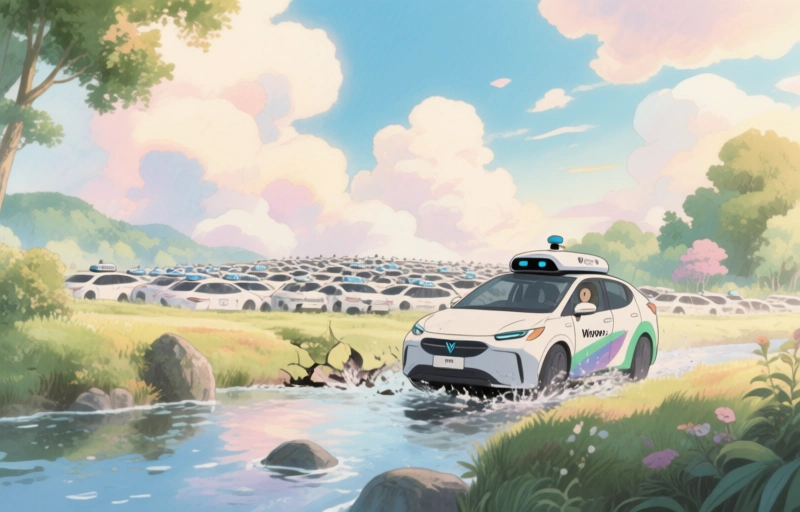
Waymo recalls thousands of self-driving cars after a software glitch caused a vehicle to drive into a creek. Learn what happened, why it matters, and what it means for autonomous vehicle safety.
It's not every day you hear about a self-driving car taking a detour into a creek. But that's exactly what happened with Waymo recently, and it's sparked a major recall. Thousands of their autonomous vehicles are being pulled back for a software fix. Let's break down what went wrong, why it matters, and what this means for the future of self-driving tech.
### The Accident That Triggered It All
The trouble started when a Waymo vehicle encountered a "glitch" that caused it to steer toward a creek instead of staying on the road. No one was hurt, but it raised serious questions. How does a car that's supposed to be smarter than a human driver end up in such a basic mistake?
This wasn't a high-speed crash or a fender bender. It was a navigation failure that could have been dangerous in other situations. Waymo acted fast, recalling thousands of vehicles to patch the software. That's the responsible move, but it also highlights that self-driving tech still has a long way to go.
### What Was the Glitch, Exactly?
The company hasn't shared every detail, but the issue seems to be related to how the car processes unexpected road conditions. Think of it like this: your GPS tells you to turn left, but there's a construction barrier. A human driver would adapt. The Waymo car, in this case, didn't adapt properly and ended up in the creek.
This is a classic example of edge cases in AI. The car can handle 99% of situations perfectly. But that 1% can trip it up. And when it does, recalls become necessary.
### Why Recalls Matter for Self-Driving Cars
Recalls aren't new in the auto industry. Traditional carmakers do them all the time for faulty airbags or brake issues. But with autonomous vehicles, recalls take on a different weight. You're not just fixing a mechanical part. You're updating the car's brain.
Here's why this recall is important:
- **Safety first**: No one wants a car that randomly drives into a ditch.
- **Trust**: If people don't trust the tech, they won't use it.
- **Regulation**: Government agencies are watching closely. One major accident could slow the entire industry down.
Waymo's quick response shows they're serious about safety. But it also reminds us that perfection is still a moving target.
### What Does This Mean for the Industry?
This recall isn't just about Waymo. It's a signal to every company working on self-driving tech. Tesla, Cruise, and others are all racing to perfect their systems. But incidents like this prove that the road to full autonomy is bumpy.
> "The hardest part of self-driving isn't the highway; it's the weird, unexpected stuff that happens on local streets."
That's the reality. A car can handle a straight road at 60 miles per hour. But throw in a fallen tree, a confused pedestrian, or a confusing intersection, and the software can struggle.
### What You Should Do If You Own a Self-Driving Car
If you're using a Waymo vehicle or any autonomous car, here are a few tips:
- **Stay informed**: Check for recall notices regularly. It's like checking your phone for software updates.
- **Don't rely 100% on the tech**: Even the best systems have blind spots. Keep your hands ready to take over.
- **Report issues**: If something feels off, tell the company. Your feedback helps them improve.
### The Bigger Picture
This recall is a speed bump, not a roadblock. Waymo will fix the glitch, and the cars will get better. But it's a reminder that innovation comes with growing pains. We're still in the early days of self-driving technology. Every mistake is a lesson learned.
So, should you be worried? Not really. Just stay aware. The future is coming, but it's not here yet. And until it is, recalls like this one will help make sure that future is safe.