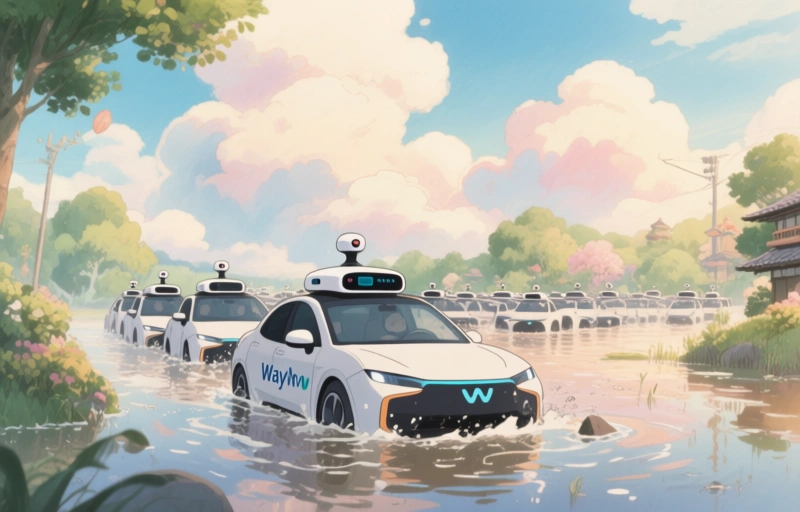
Waymo recalled its entire robotaxi fleet after a self-driving car drove into floodwaters. Learn what went wrong and what it means for drivers.
Waymo's entire fleet of self-driving taxis just got hit with a recall. The reason? One of their autonomous vehicles drove straight into floodwaters, and what happened next is a wake-up call for anyone who shares the road with these cars.
Let's break down what went wrong, what it means for the future of self-driving tech, and why this matters for drivers like you.
### The Incident That Sparked the Recall
It was a rainy day in Phoenix when a Waymo robotaxi encountered a flooded street. Instead of stopping or rerouting, the car kept going and ended up submerged in water. No one was hurt, but the event exposed a serious flaw in the system's decision-making.
The vehicle's sensors and software failed to recognize the flood as a danger. That's a big deal because autonomous cars rely on cameras, radar, and lidar to "see" the world. Water can confuse these systems, especially when it's murky or covers the road.
### What the Recall Actually Means
A recall for a self-driving car isn't like a traditional one. You don't take it to a dealer for a new part. Instead, Waymo pushed a software update to all its vehicles remotely. The update improved how the cars detect and respond to standing water.
But here's the thing: recalls for autonomous vehicles are becoming more common. Tesla, Cruise, and now Waymo have all issued them. It shows that even the most advanced tech has blind spots.
### Why This Is a Warning for All Drivers
You might think, "I don't own a self-driving car, so this doesn't affect me." But it does. Robotaxis are already operating in multiple U.S. cities, and their number is growing. If a self-driving car makes a bad decision, it can put everyone on the road at risk.
- **Safety gaps:** Autonomous systems still struggle with unusual conditions like floods, heavy snow, or construction zones.
- **Regulation lag:** Government oversight hasn't kept up with the tech. Recalls are often voluntary, not mandatory.
- **Public trust:** Every incident like this erodes confidence in self-driving technology.
### What Car Owners Can Learn From This
Even if you're not riding in a robotaxi, you can take steps to protect yourself. One of the best things you can do is regularly check for recalls on your own vehicle. Many drivers ignore recall notices, but they exist for a reason.
> "A recall is not a sign of failure. It's a sign that the manufacturer is taking responsibility."
For traditional cars, recalls often fix critical safety issues like faulty airbags or brake problems. For autonomous vehicles, they fix software bugs that could lead to crashes.
### How to Stay Informed About Recalls
You don't need to wait for a letter in the mail. There are several ways to stay on top of recalls:
- Visit the National Highway Traffic Safety Administration (NHTSA) website.
- Use a reliable recall check service online.
- Sign up for alerts from your car's manufacturer.
For self-driving cars, it's a bit different. The companies usually push updates automatically, but you should still pay attention to news about the vehicles in your area.
### The Bigger Picture
Waymo's recall is a reminder that technology isn't perfect. Self-driving cars have the potential to reduce accidents caused by human error, but they're not there yet. Every incident teaches engineers something new.
For now, the best approach is caution. If you see a robotaxi driving through a flooded street, stay far away. And always keep your own vehicle's safety up to date.
### Final Thoughts
Recalls aren't something to fear. They're a sign that the system is working. Waymo identified a problem and fixed it quickly. That's good for everyone.
But it also shows that we're still in the early days of autonomous driving. Until these cars can handle every possible scenario, we all need to stay alert.
Remember: your safety on the road depends on more than just your own driving. It depends on the cars around you too.