Volkswagen Recalls 44K Cars: Battery Fire Risk Prompts Urgent Parking Warning
William Miller ·
Listen to this article~4 min
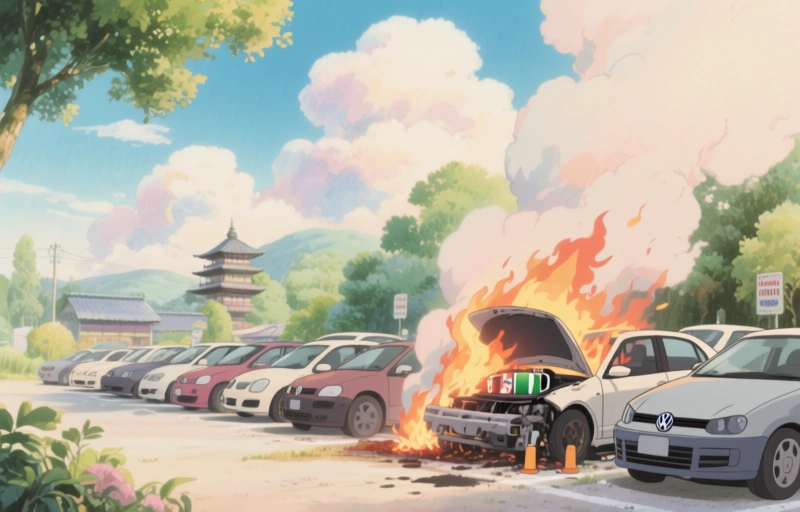
Volkswagen issues an urgent recall for 44,000 vehicles due to a battery fire risk, with some owners instructed to park outside immediately. A critical situation for recall management professionals.
If you're handling recalls professionally, you've probably seen this pattern before. A potential defect emerges, the investigation begins, and then the official notice lands on your desk. This time, it's Volkswagen in the spotlight, and the issue is one that gets everyone's attention: a battery fire risk. They're recalling about 44,000 vehicles, and for some owners, the guidance isn't just a standard service appointment. It's an urgent directive to park outside immediately. Let's break down what this means for you and the owners you're assisting.
### Understanding the Scope of the Recall
First, the numbers. We're talking roughly 44,000 vehicles. That's a significant batch, and it points to a specific component or manufacturing period. While the exact models and model years haven't been detailed in the initial alert, recalls of this scale typically center on a particular battery module or charging system used across a line of vehicles. It's not a blanket 'all electric cars' situation, but a targeted issue that needs precise identification.
The core problem is a thermal risk within the high-voltage battery. Something—maybe a faulty seal, a sensor, or a cell—could lead to overheating. And as you know, with lithium-ion batteries, that's a serious chain reaction waiting to happen. It's not a guaranteed fire for every car, but the risk is high enough that the manufacturer can't wait.
### The Critical 'Park Outside' Advisory
Here's the part that changes the communication strategy. For a subset of these vehicles, the risk assessment is severe enough that Volkswagen is urging owners to park them outside and away from structures immediately. They don't want these cars in garages, carports, or near homes overnight. That's a powerful statement. It tells us the engineers have identified a scenario where a fire could start even when the vehicle is off and parked.
This isn't common. Most recalls come with a 'schedule service at your convenience' notice. An immediate outdoor parking order elevates the urgency to a different level. For recall professionals, this means your outreach needs to be clear, direct, and emphasize this safety step above all else. It's the first action item before the fix is even available.
### What This Means for Recall Management
So, what's your playbook? Your processes are about to be tested. You'll need to manage a few key flows simultaneously.
- **Owner Notification:** Speed and clarity are non-negotiable. Communications must highlight the 'park outside' directive for affected VINs without causing unnecessary panic for owners of other models.
- **Dealer Readiness:** Service centers need the diagnostic software, replacement parts, and technician training lined up before owners start calling. This recall will likely involve battery module inspection and replacement.
- **Logistics:** Handling 44,000 battery packs is a massive logistical operation. There will be parts constraints and scheduling backlogs. Setting realistic timelines with owners will be crucial.
As one veteran analyst put it, "A recall with an immediate action warning shifts from a maintenance item to an active risk mitigation exercise. Your entire timeline compresses."
### Looking at the Bigger Picture
Let's take a step back. This Volkswagen situation fits into a broader narrative we're all watching: the growing pains of vehicle electrification. Battery recalls are complex, costly, and carry unique safety protocols. They challenge traditional recall frameworks. The parts are heavier, the diagnostics are more software-dependent, and the safety risks, as we see here, can require immediate behavioral changes from owners.
For professionals in this field, it's another case study in modern recall management. It underscores why having robust systems for rapid VIN identification, multi-channel owner communication, and dealer technical support isn't just good practice—it's essential for managing these high-stakes campaigns effectively. The goal, as always, is to get every affected vehicle repaired safely and efficiently, turning a potential crisis back into a trusted vehicle on the road.