Volkswagen Recalls 44,000 EVs Over Battery Fire Risk
William Miller ·
Listen to this article~4 min
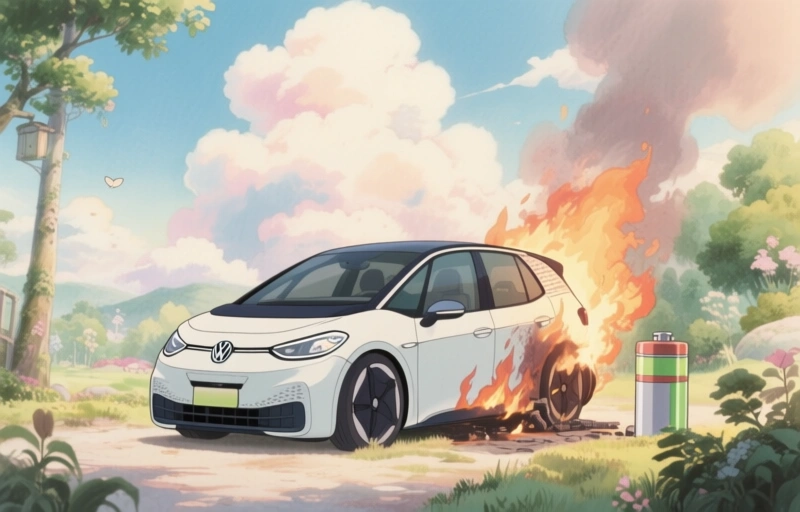
Volkswagen issues a major safety recall for 44,000 ID.4 electric SUVs due to a manufacturing defect in the high-voltage battery that poses a fire risk. Analysis for recall professionals.
Hey there. If you're in the recall business, you've probably seen the alert come across your desk by now. Volkswagen is recalling about 44,000 of its electric vehicles. The reason? A potential fire risk tied to the high-voltage battery.
It's one of those situations that makes you pause. We're talking about the heart of an electric vehicle here. When that core component has a flaw, it gets everyone's attention—manufacturers, regulators, and especially us professionals who have to manage the fallout.
### What's the Core Issue?
The recall centers on a specific defect within the battery modules. It's not a widespread charging problem or a software glitch. This is a physical manufacturing defect that could, under certain conditions, lead to a thermal event. In plain English: it could overheat and potentially catch fire.
Volkswagen hasn't released the exact failure mode publicly yet, but the language points to an internal short circuit risk. That's the kind of thing that keeps engineers up at night. It's silent, it's sudden, and it's serious.
### Which Models Are Affected?
The recall isn't across VW's entire EV lineup. It's targeted. The affected vehicles are specific model years of the ID.4 SUV. If you're tracking this for a dealership, fleet, or regulatory body, you'll need to check the VIN ranges. The total sits around 44,000 units in the U.S. market.
It's a significant number, but it's also contained. That's the first bit of good news. They've identified the batch, which means the root cause is likely isolated to a specific production period or component supplier.
### The Professional's Playbook
So, what does this mean for your workflow? A few things jump out immediately.
- **Communication is key.** You'll need clear, factual talking points for concerned owners. No speculation, just the facts as VW and the NHTSA release them.
- **Logistics matter.** 44,000 vehicles need inspections, and possibly new battery modules. That's a massive parts and labor pipeline to set up.
- **Document everything.** From initial customer contact to final repair verification, your paper trail needs to be impeccable.
It's a huge operational lift. But it's also a case study in how a major OEM handles a critical safety issue in the EV era.
### Why This Recall Feels Different
There's a quote from an old engineer I worked with that always comes to mind in these situations: *"A recall isn't a failure of the product; it's a test of the company."* This feels like one of those tests.
Battery recalls are complex. They're not like swapping out a faulty airbag sensor. The repair procedure is highly specialized, requiring specific tools and training to safely depower and handle the high-voltage system. It's not a quick lane service.
The stakes are also perceived differently by the public. "Fire risk" carries a powerful psychological weight. Your communication strategy has to acknowledge that concern without inflaming it.
### Looking at the Bigger Picture
Let's take a step back. This isn't the first battery-related recall, and it won't be the last. As the EV fleet ages and expands, we're going to see more of these. Each one teaches us something.
For VW, this is about protecting their brand in a competitive market. For us as professionals, it's about refining our processes. How quickly can we identify affected vehicles? How efficiently can we execute the remedy? How clearly can we communicate with all stakeholders?
It's a reminder that our job is never just about the paperwork. It's about trust. Car owners trust that their vehicle is safe. Our work in managing a recall effectively is how that trust is maintained, even when something goes wrong.
So, keep an eye on the official NHTSA recall page for the final report. Watch for the service bulletins. And remember, a well-managed recall can actually build stronger customer loyalty than if nothing had ever happened at all. It's all in the execution.