Volkswagen ID.4 Recall: 40,000 EVs Face Fire Risk
William Miller ·
Listen to this article~4 min
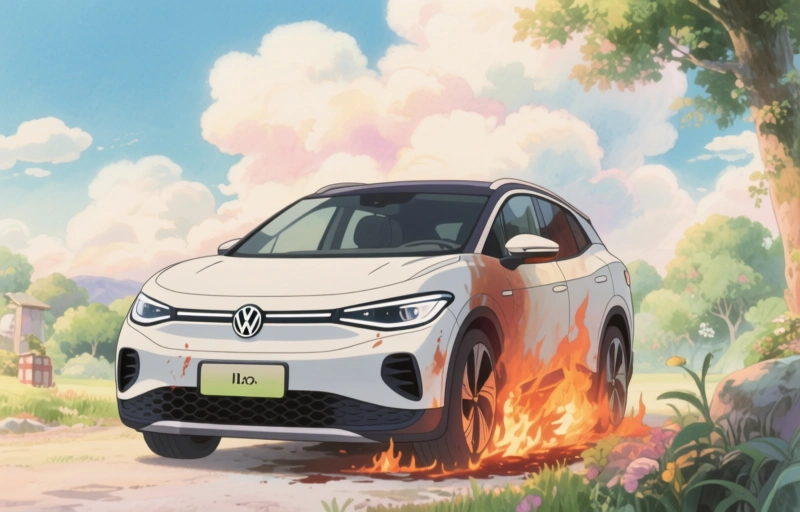
Volkswagen recalls approximately 40,000 ID.4 electric SUVs due to a software-related fire risk. The recall targets 2021-2023 models and requires a dealership software update to the battery management system.
Hey there. If you're in the recall business, you've probably seen the alert come across your desk by now. Volkswagen is recalling about 40,000 of its ID.4 electric SUVs. The reason? A potential fire risk that's got everyone's attention.
It's one of those situations where you take a deep breath and start mapping out the process. For professionals like you, it's not just a headline—it's a workflow, a checklist, and a whole lot of customer conversations waiting to happen.
### What's the Core Issue?
The recall centers on a problem with the high-voltage battery system. In certain 2021-2023 model year ID.4 vehicles, a specific software issue within the battery management unit can cause a malfunction. This isn't about a physical part breaking; it's about the computer that controls the battery making a wrong call.
When this glitch happens, it can lead to a sudden loss of power while driving. More critically, it can create conditions where the battery cells might overheat. And as we all know, when lithium-ion batteries overheat, the risk of a thermal event—a fire—becomes very real. It's the kind of silent, software-driven fault that keeps engineers up at night.
### The Scope and Immediate Steps
So, what does this mean on the ground? We're looking at roughly 40,000 vehicles in the U.S. market. Owners are being notified, and the remedy is a software update. That's the good news—no physical battery replacement for most units.
But here's the thing about software recalls: they sound simple, but they require precision. The update must be performed by authorized technicians. It's not an over-the-air fix the owner can do in their driveway. Every vehicle needs to come in.
- **Notification Phase:** VW has filed with NHTSA and is rolling out owner letters.
- **Remedy:** Dealerships will perform a specific software reflash on the battery management controller.
- **Timeline:** Owners are advised to schedule service as soon as they get their notice. There's no stop-drive recommendation, but urgency is emphasized.
### Why This Recall Matters for Professionals
You might be thinking, 'It's just a software patch.' But from our perspective, it's a case study in modern automotive issues. The cars we're dealing with are increasingly computers on wheels. This recall highlights a critical shift:
> "The fault lines are moving from mechanical wear to digital logic. Our processes have to adapt just as fast."
It changes how we communicate risk to owners. Explaining a software bug feels different than explaining a cracked weld. It requires clear, confident language that doesn't minimize the seriousness—a fire risk is a fire risk—but also doesn't induce panic over an intangible problem.
Logistically, it tests dealership capacity. Can your local service center handle a sudden influx of 40,000 EVs needing a specific, technical update? It puts pressure on technician training and tooling. It's a reminder that the skill sets in our industry are evolving rapidly.
### Looking at the Bigger Picture
Let's be honest, every major EV recall gets magnified. It feeds into public narratives about electric vehicle safety. For us professionals, that's background noise. Our job is to execute the recall flawlessly, restore safety, and maintain trust.
This VW action follows a pattern we've seen with other manufacturers. As battery technology and software integration advance, these are the growing pains. Our role is to manage them methodically, ensuring every vehicle is accounted for and corrected.
The key takeaway? Stay sharp on your communication protocols. Ensure your teams understand the technical specifics so they can explain them simply. And remember, behind every VIN number in this recall is an owner who needs clear guidance. Getting them in, updated, and back on the road safely—that's the mission, plain and simple. It's what we do.