Toyota Tacoma: Last Manual Pickup Truck's Survival Test
William Miller ·
Listen to this article~5 min
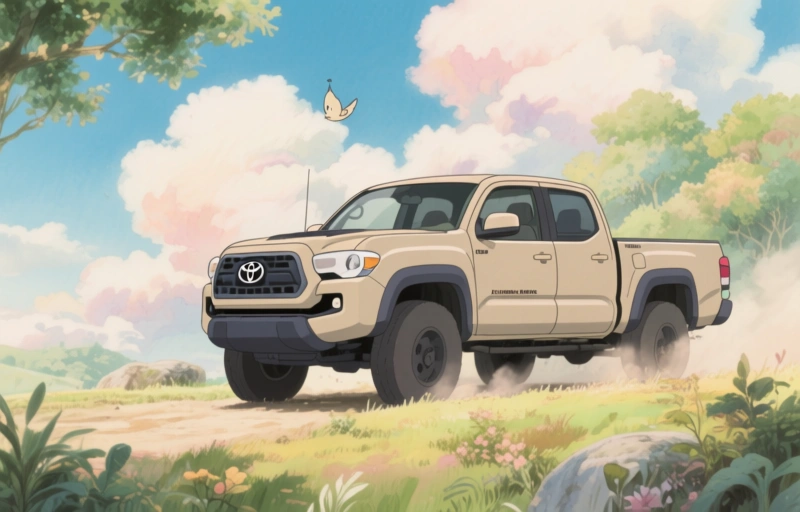
The Toyota Tacoma's manual transmission stands alone in the pickup market. Can dedicated enthusiasts sustain this driving experience, or is it the end of an era for manual trucks?
Let's talk about something that feels increasingly rare these days. You know that satisfying click of a gear shift? The deliberate dance between clutch and throttle? The Toyota Tacoma TRD Off-Road with its 6-speed manual transmission is holding the line as the last of its kind in the pickup truck market. It's a fascinating case study, really. We're watching to see if enough dedicated enthusiasts will step up to keep this driving experience alive, or if it will quietly fade into automotive history like so many other manual transmissions before it.
### Why This Manual Matters
Think about it for a second. Every other pickup truck you can buy new today comes with an automatic transmission. That's not an exaggeration—it's the current reality. The Tacoma's manual option, especially in the capable TRD Off-Road trim, represents more than just a gearbox choice. It's a statement about driver engagement, control, and a particular philosophy of what driving a truck should feel like. For professionals who understand vehicles inside and out, this isn't just nostalgia. It's about precision in specific situations where you want direct command over gear selection, like careful crawling over rough terrain or managing engine braking on steep descents.
### The Enthusiast Equation
So who's buying these trucks? We're looking at a specific subset of buyers. They're not just looking for transportation from point A to point B. They're seeking an experience. These are often people who:
- Value mechanical connection and driver skill
- Enjoy the added control in off-road scenarios
- Appreciate the traditional simplicity and durability
- See the manual as a theft deterrent in some markets
The real question isn't whether these people exist—we know they do. The question is whether there are enough of them to meet Toyota's production and profitability thresholds. Automotive manufacturers make these decisions with spreadsheets, not sentiment. If the numbers don't add up, no amount of enthusiast passion will save the manual transmission option.
### What's at Stake for the Industry
This goes beyond one truck model. The Tacoma's manual transmission is a bellwether. Its fate will signal to other manufacturers whether there's still a viable market for manual options in utility vehicles. If it disappears, we likely won't see another manufacturer attempt a manual pickup for a very long time, if ever. That creates a ripple effect. Fewer manuals mean fewer mechanics trained to work on them, fewer parts available, and a gradual erosion of that entire driving skill set. It becomes a self-fulfilling prophecy.
As one industry veteran recently noted, 'The manual transmission isn't dying because it's inferior for everyone. It's disappearing because it's superior for too few.' That's a poignant way to look at the market forces at play.
### Looking Beyond the Numbers
Here's where it gets interesting for recall and automotive professionals. Manual transmissions have different failure modes and maintenance needs than automatics. They present unique considerations:
- Clutch wear and replacement intervals
- Synchro wear in specific gears
- Shift linkage adjustments and bushings
- Potential for driver-induced damage from improper operation
Understanding these vehicles becomes a specialized knowledge area. If production ends, that knowledge becomes archival rather than current, which changes how we approach long-term support and parts availability.
### The Practical Reality Check
Let's be honest for a moment. The market has spoken loudly in favor of automatics for most buyers. Modern automatics offer faster shifts, better fuel economy in many cases, and convenience that appeals to the majority. The manual Tacoma exists in a shrinking niche. Toyota's continued offering is both a nod to tradition and a test of that niche's buying power. Every model year it continues is a small victory for driving enthusiasts. Every sales report is scrutinized to see if the line on the graph justifies another production cycle.
So what's the verdict? It's still being written. The Tacoma manual's survival depends on a simple economic truth: enough people need to vote with their wallets, consistently, year after year. For now, it's still here. The gear shift waits for the next hand, the next shift, the next driver who prefers to select their own path, both on the road and through the gears. Its continued presence is a testament to a particular kind of automotive passion—one that values participation over automation, and connection over convenience. Only time will tell if that passion is strong enough to sustain it.