Toyota's Recall Nightmare: Is Your Car a Ticking Time Bomb?
William Miller ·
Listen to this article~5 min
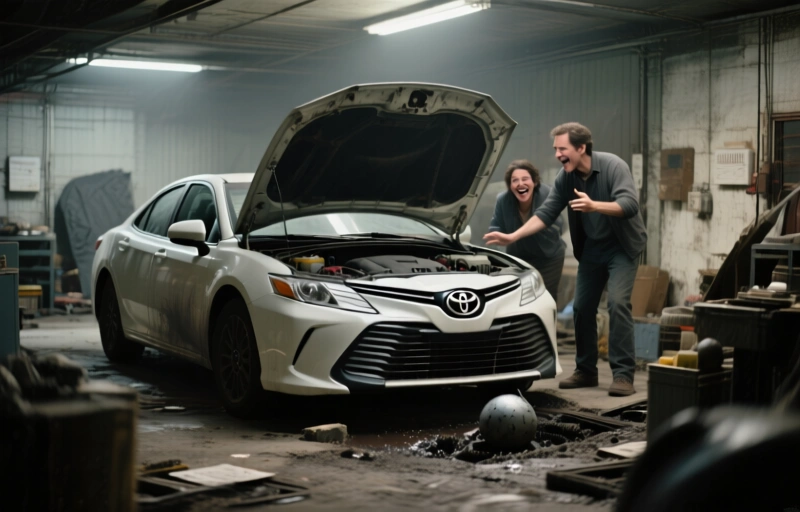
A major Toyota recall demands 55,000 vehicles be parked immediately due to dangerous airbag defects. Here's what owners must do, and the crucial lesson for every small business about trust and safety.
Okay, let's talk about something that honestly makes my stomach drop a little. You know that feeling when you're trusting a big brand, you've invested your hard-earned money, and then... boom. They tell you there's a problem. A serious one. That's the spot thousands of Toyota owners are in right now. We're not talking about a loose cup holder here. This is a full-blown safety recall affecting a massive 55,000 vehicles. And the message from the authorities is stark: stop driving. Immediately. Think about that for a second. It's not "get it checked soon." It's stop. Now. That kind of urgency tells you everything you need to know about the potential risk. It's the kind of news that makes you look at your own car in the driveway differently, you know?
### What's Actually Going On?
The defect is specific, and honestly, it's a bit technical. But here's the core of it in plain English: there's a serious issue with the airbag system in certain Toyota models. We're talking about the Takata airbag inflators, which have been a global nightmare for years now. In these particular vehicles, the propellant inside the inflator can degrade over time. Especially if it's exposed to high humidity and temperature swings. When that happens, the metal inflator can rupture during deployment. Instead of a controlled release of gas to cushion you, it can explode, sending sharp metal fragments flying through the cabin. At the driver. Or the passenger. It's a safety device turning into a shrapnel grenade. That's the cold, hard truth of it. And it's why the "stop driving" order isn't an overreaction—it's the only sane response.
### Which Models Are We Talking About?
If you're sitting there wondering, "Is it mine?" here's the list. The recall specifically targets certain Toyota Corolla and Corolla Matrix models from the 2003 to 2004 model years. Also some RAV4 models from 2004 and 2005. I know, they're older cars. But that's part of the problem, really. Age and environmental exposure are key factors in this defect. These are often second-hand cars, maybe a first car for a kid, or a reliable runabout you've had for years. The very cars people depend on. Toyota should be reaching out directly to registered owners, but we all know how that goes—addresses change, paperwork gets lost. If you own one of these models, or know someone who does, you absolutely cannot wait for a letter. You need to proactivly check. Like, right now. Use Toyota's official VIN lookup tool on their website. It takes two minutes.
### The Bigger Picture for Sellers Like Us
Now, you might be thinking, "Felix, I sell handmade candles on Etsy. What's this got to do with me?" And fair point. But stick with me. This isn't just about cars. It's about trust. And reputation. And what happens when a brand you rely on lets you down. Your customers trust you with their homes, their gifts, their special moments. They trust that your materials are safe. That your wicks are lead-free. That your glass won't shatter. We operate on that same fundamental promise of safety and quality. When Toyota, a giant, messes up this badly, it's a stark reminder for all of us small business owners. Our attention to detail isn't just about aesthetics; it's about integrity. It's about sleeping at night knowing you didn't cut a corner that could hurt someone. A recall of this scale is a logistical and reputational disaster. The cost, the panic, the lost faith. It makes the effort we put into sourcing safe materials and clear labeling feel not just important, but essential. It's the difference between being a faceless corporation and a person someone trusts.
### So, What Should You Actually Do?
First, if you own one of these Toyotas, park it. Call Toyota or a local dealer. They are obligated to provide a free repair. In many cases, they're offering free towing to the dealership and even loaner cars until the fix is done. Don't try to negotiate or wait for a convenient time. This isn't a negotiation. Second, spread the word. Tell your friends, your family, your community groups. Someone you know might be driving one of these and just hasn't heard. Third, for us sellers, take a minute. Look at your own shop. Your processes. Is there anything that gives you even a sliver of doubt about safety? Any material you're not 100% on? Now's the time to address it. Not after a problem, but before. Because rebuilding trust is a thousand times harder than keeping it. Toyota is learning that lesson the hard way, and honestly, we can't afford to. Our businesses are too personal, too connected to who we are. Let's use their mistake as our reminder: the details aren't just details. They're the foundation of everything.