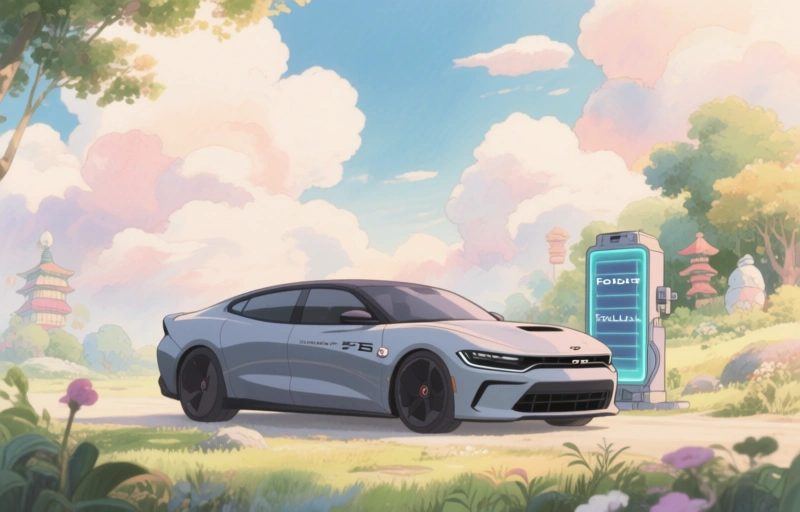
Stellantis partners with Factorial to test solid-state batteries in a Dodge Charger Daytona. Improved energy density and faster charging could revolutionize EVs for US drivers.
Stellantis is making a bold move toward the future of electric vehicles. Together with battery supplier Factorial, they've modified a Dodge Charger Daytona to run on new solid-state battery cells. These cells promise better energy density and faster charging. It's a big step for EV technology, and it could change how we think about electric muscle cars.
### What Are Solid-State Batteries?
Solid-state batteries are different from the lithium-ion batteries we see in most EVs today. Instead of a liquid electrolyte, they use a solid material. This makes them safer, more energy-dense, and quicker to charge. Think of it like upgrading from a standard gas tank to a high-performance fuel cell. For a car like the Charger Daytona, that means more power and less waiting around.
### Why the Dodge Charger Daytona?
The Charger Daytona is a symbol of American muscle. By testing solid-state tech in this iconic car, Stellantis is showing they're serious about performance. The goal isn't just to make an EV that's efficient. They want one that's thrilling to drive. With solid-state cells, the Charger could offer longer range and quicker acceleration. That's a win for anyone who loves speed.
### The Promise of Improved Energy Density
Energy density is a fancy term for how much power a battery can store in a given space. Solid-state cells pack more energy into the same size. For drivers, that means more miles per charge. Imagine driving from New York City to Washington, D.C. on a single charge, without sweating it. That's the kind of range we're talking about. Factorial's tech aims to make that real.
### Faster Charging, Less Downtime
Charging an EV can be a pain, especially on long trips. Solid-state batteries could cut that time significantly. Instead of waiting 30 minutes at a fast charger, you might be back on the road in 15. That changes everything for road trips. It makes EVs more practical for everyday use. And for a muscle car, it means you can get back to the fun faster.
### What This Means for the US Market
American drivers love power and convenience. Solid-state batteries offer both. If Stellantis succeeds, we could see this tech in production cars within a few years. The Charger Daytona test is a signal that the future is coming. For professionals in the car recall check services industry, this is good news too. New tech means new systems to monitor, but it also means fewer safety risks. Solid-state batteries are less prone to overheating and fires, which could reduce recall issues down the line.
### A Real-World Test
This isn't just a lab experiment. Stellantis and Factorial have put the modified Charger on the road. Real-world testing is crucial. It helps uncover problems you can't predict in a lab. Things like temperature swings, road vibrations, and long-term wear. By pushing the battery in a high-performance car, they're stress-testing it. If it holds up here, it can handle almost anything.
### The Bottom Line
Solid-state batteries could be the next big leap for EVs. Stellantis is leading the charge with this Charger Daytona test. It's exciting for car enthusiasts and practical for everyday drivers. For professionals in the US, it's a trend to watch. As this tech matures, it could reshape the automotive landscape. Safer, faster, and more powerful. That's a future worth getting excited about.