Senators Target Amazon Auto Listings With Open Recalls
William Miller ·
Listen to this article~5 min
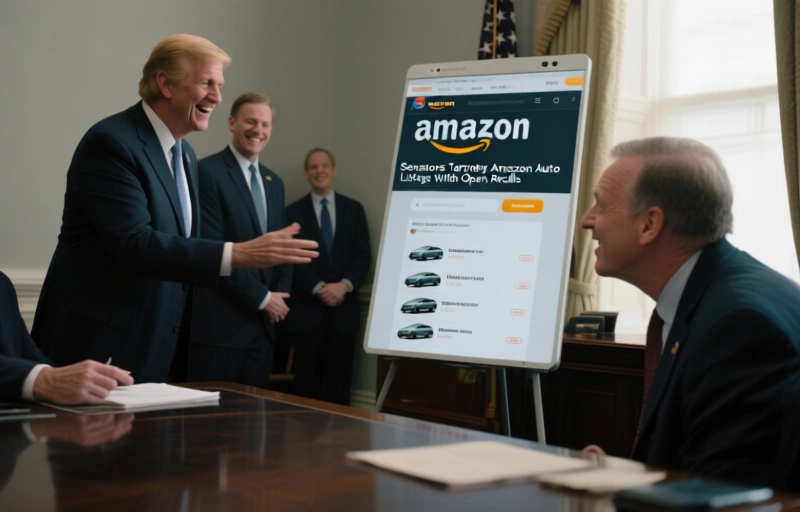
U.S. Senators are pushing for online auto marketplaces like Amazon to remove listings for vehicles with unresolved safety recalls, marking a potential shift in digital sales responsibility and consumer protection.
You know how it goes. You're scrolling through online car listings, looking for that perfect deal. Maybe it's a used sedan for your teenager or a weekend project truck. The price looks right, the photos are clean, and the seller seems reputable. But what if that vehicle has a dangerous, unresolved safety recall? That's the exact scenario a group of U.S. Senators is trying to prevent on platforms like Amazon's auto marketplace.
It's a conversation that's heating up in Washington. Lawmakers are pushing for major online vehicle marketplaces to take more responsibility. Their core demand? Simple, but significant: if a car has an open safety recall, it shouldn't be listed for sale until that recall is fixed.
### Why This Push Matters for Professionals
If you work in the recall space, this isn't just political noise. It's a potential seismic shift in how vehicles enter the secondary market. For years, the onus has largely been on dealers and private sellers to disclose recall status. Online platforms have often acted as neutral bulletin boards. This legislative push challenges that model directly, suggesting platforms share legal and ethical responsibility for the safety of the products they help sell.
Think about the scale here. Millions of consumers use these sites. A single listing for a car with a faulty airbag or defective brake component isn't just a bad deal—it's a public safety hazard waiting to happen. The senators argue that allowing these listings creates an unnecessary risk that modern technology and data sharing could easily prevent.
### The Practical Hurdles and Data Gaps
Now, let's be real. Implementing this isn't as simple as flipping a switch. The biggest challenge is data integration. A platform needs real-time, reliable access to the National Highway Traffic Safety Administration's (NHTSA) recall database. They need to be able to cross-reference every Vehicle Identification Number (VIN) listed. That requires robust systems and constant updates.
There's also the question of enforcement. What happens when a seller tries to list a recalled car? Does the platform block the listing entirely? Does it flag it with a giant warning? And who's liable if a recalled car slips through the cracks? These are the gritty details that recall professionals will need to help navigate.
- **Data Accuracy:** Ensuring the VIN lookup tools are flawless is non-negotiable. A single error could wrongly flag a car or, worse, miss a dangerous one.
- **Seller Education:** Many private sellers genuinely don't know their car has an open recall. The process needs to educate, not just penalize.
- **Remedy Availability:** Sometimes a recall is issued, but the replacement parts aren't immediately available. Should that car be delisted indefinitely?
As one industry insider recently noted, "The goal is safety, not obstruction. The ideal system stops dangerous cars from being sold while seamlessly guiding owners to the free repair."
### What This Means for the Future of Online Sales
This move by the senators could be a tipping point. It signals a growing expectation that digital marketplaces have a duty of care that goes beyond just connecting buyers and sellers. For professionals, it means the regulatory landscape is expanding to cover the digital showroom. Compliance is no longer just about repair shops and dealerships; it's about the platforms that host the listings.
We're likely to see more pressure on all major online automotive sales sites to adopt stricter policies. This could lead to new industry standards for recall transparency. Imagine a future where a clean recall history is as important as a clean Carfax report in a listing's description. It would fundamentally change how consumers shop and how sellers present their vehicles.
Ultimately, this is about closing a loophole. A car with a critical safety defect shouldn't be able to find a new owner simply because the sale happens online instead of on a physical lot. The technology exists to prevent it. The question now is whether the will and the regulatory framework will follow. For those of us in the field, it's a clear call to pay attention—because the rules of the game for getting recalled vehicles off the road are being rewritten, one online listing at a time.