Nissan Recalls 51 Leaf EVs Over Fire Risk While Parked
Wouter Smit ·
Listen to this article~4 min
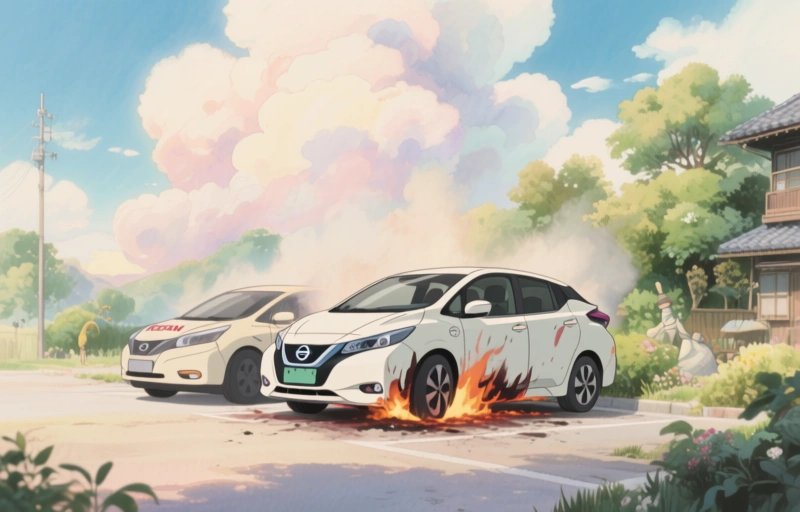
Nissan recalls 51 new Leaf EVs due to fire risk from battery defects that could cause spontaneous combustion even when vehicles are parked and not charging. Owners advised to park outside until repairs completed.
You know that sinking feeling when you hear about a car recall? It's especially unsettling when it involves something as serious as fire risk. Nissan just issued a recall for 51 of its new Leaf electric vehicles, and here's the concerning part—these vehicles could potentially experience spontaneous combustion even when they're not plugged in.
That's right. Parked, turned off, just sitting there. It's the kind of scenario that makes you double-check where you park your own car at night.
### What's Actually Happening With These Leaf EVs?
The recall affects specific 2023 Nissan Leaf models. According to the safety notice, a manufacturing defect in the high-voltage battery system could lead to an internal short circuit. This isn't about charging problems or driving issues—it's about a component that might fail while the vehicle is completely inactive.
Think about it like this: you've got a sophisticated electrical system that's supposed to be dormant when the car's off. But in these particular vehicles, something might go wrong in that dormant state. The battery management system might not properly isolate a faulty cell, which could lead to thermal runaway—that's the technical term for when things get hot enough to potentially ignite.
### Why This Recall Matters For EV Owners
This situation highlights something important about modern vehicles, especially electric ones. We're dealing with incredibly complex systems that need to be perfect. A tiny flaw in manufacturing can have serious consequences. What's particularly notable here:
- The affected vehicles are brand new (2023 models)
- The risk exists even when the vehicle isn't in use
- Only 51 vehicles are affected, suggesting a very specific production issue
- Nissan is moving quickly to address the problem
It's actually somewhat reassuring that Nissan identified this quickly and is taking action. The alternative—waiting for incidents to occur—would be far worse.
### What Should Affected Owners Do?
If you own one of these 51 vehicles, Nissan will be contacting you directly. They're advising owners to park their vehicles outside and away from structures until the repair can be completed. That means no garage parking, no carports close to your house—keep it in the open.
The fix involves inspecting and potentially replacing the battery pack. Nissan dealers will handle everything at no cost to owners. Here's what the process typically looks like:
- You'll receive official notification from Nissan
- Schedule an appointment with your local dealer
- The dealer will perform a diagnostic inspection
- If needed, they'll replace the battery assembly
- You'll get your vehicle back with the issue resolved
As one automotive safety expert recently noted, 'Early detection and proactive recalls demonstrate that safety monitoring systems are working as intended, even if the underlying issue is concerning.'
### The Bigger Picture On Vehicle Safety
This recall, while small in numbers, reminds us why vehicle safety checks matter. Whether you drive an EV or a conventional vehicle, staying informed about recalls is part of responsible ownership. These systems are designed to catch problems before they become widespread issues.
For the rest of us who don't own these specific vehicles, it's a good reminder to:
- Regularly check for recalls on your own vehicles
- Pay attention to manufacturer communications
- Understand that recalls are a sign the system is working
- Never ignore recall notices when you receive them
At the end of the day, this is about safety systems doing their job. A defect was identified, a solution was developed, and owners are being protected. That's how it's supposed to work, even when the underlying issue sounds alarming.
The automotive industry has come a long way in how it handles these situations. Quick identification, transparent communication, and free repairs—that's the standard we should expect and that manufacturers are generally delivering on.