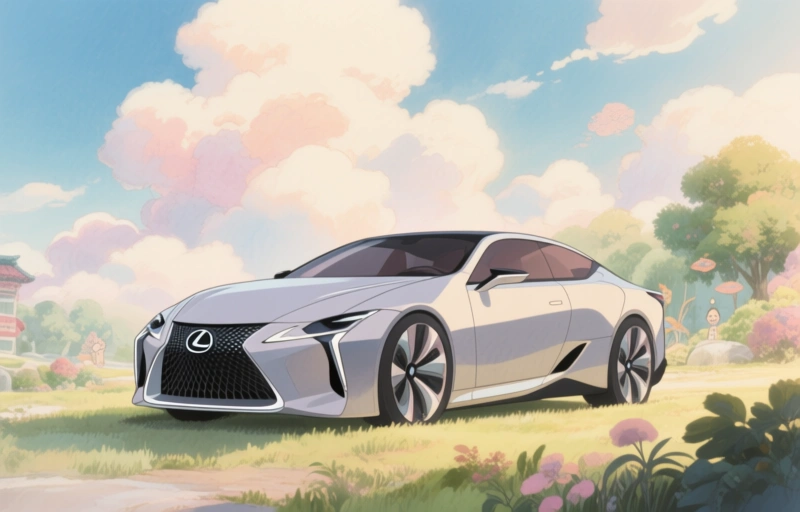
Lexus has cancelled plans to produce the LF-ZC concept car, its would-be flagship EV. Rising costs, supply chain issues, and shifting strategy led to the decision. Here's what it means for the brand and the EV market.
Lexus has officially shelved plans to bring the LF-ZC concept car to production. The would-be flagship was scheduled to hit assembly lines this year, but a mix of market shifts, supply chain issues, and strategic pivots forced the automaker to pull the plug on this next-generation EV.
It's a big move for a brand that's been positioning itself as a serious player in the electric vehicle space. The LF-ZC was supposed to be Lexus's statement vehicle—a sleek, high-tech EV that would compete with the likes of Tesla and Mercedes-Benz. So why did it get cancelled? Let's break it down.
### The Roadblocks Behind the Decision
Several headwinds stacked up against the LF-ZC's production timeline. For starters, the global semiconductor shortage continues to disrupt automotive manufacturing, pushing back development and increasing costs. But that's just one piece of the puzzle.
- **Rising material costs:** Lithium, nickel, and cobalt prices have spiked, making EV batteries significantly more expensive. Lexus likely found that the LF-ZC's battery pack would push the price tag well above $80,000, which is a tough sell in a market where affordability is key.
- **Shifting consumer demand:** While EV adoption is growing, it's not growing as fast as automakers predicted. Many buyers are still hesitant due to range anxiety, charging infrastructure gaps, and high upfront costs. Lexus may have decided it's smarter to focus on more accessible models.
- **Internal strategy realignment:** Toyota, Lexus's parent company, has been doubling down on hybrid technology and solid-state batteries. The LF-ZC was built around a traditional lithium-ion setup, which might not align with Toyota's long-term roadmap.
It's not that Lexus is giving up on EVs—far from it. But this cancellation signals a more cautious approach. Instead of rushing a flagship, the brand seems to be waiting for the right technology and market conditions to align.

### What This Means for Lexus Enthusiasts
If you were excited about the LF-ZC, you're probably disappointed. And you're not alone. The concept turned heads at auto shows with its futuristic design and promised 500-mile range. But here's the thing: concept cars often don't make it to production. They're meant to showcase ideas, not necessarily deliver them.
Lexus isn't abandoning the EV space. They've already launched the RZ 450e, a compact SUV, and have plans for more models. The LF-ZC's cancellation might actually be a blessing in disguise—it gives the brand time to develop a more competitive vehicle that can truly take on the market.
> "Sometimes the smartest move is to hit pause and re-evaluate. Lexus is choosing long-term success over short-term hype."
### The Bigger Picture for the EV Industry
This isn't just a Lexus story. Automakers across the board are recalibrating their EV strategies. Ford has delayed some EV launches. GM is scaling back production targets. Even Tesla, the market leader, has faced demand slowdowns. The EV gold rush is cooling off, and companies are realizing that building a great EV isn't enough—you need the right timing, pricing, and infrastructure.
For Lexus, the LF-ZC's cancellation is a strategic retreat, not a surrender. They're betting that waiting a few more years will let them leapfrog competitors with better battery tech, lower costs, and a clearer market fit.
### What Should You Do If You're Shopping for a Lexus EV?
If you're in the market for a Lexus EV, your options are limited right now. The RZ 450e is the only game in town, and it starts around $55,000. It's a solid vehicle, but it doesn't have the range or performance of some rivals. If you can wait, you might see a more compelling Lexus EV by 2026 or 2027.
In the meantime, the LF-ZC's cancellation is a reminder that the auto industry is in flux. Plans change. Headwinds shift. And sometimes, the best car is the one that never gets built—because it gives way to something better down the road.