Hyundai Santa Cruz Future: Model Discontinuation and Larger Truck Plans
William Miller ·
Listen to this article~5 min
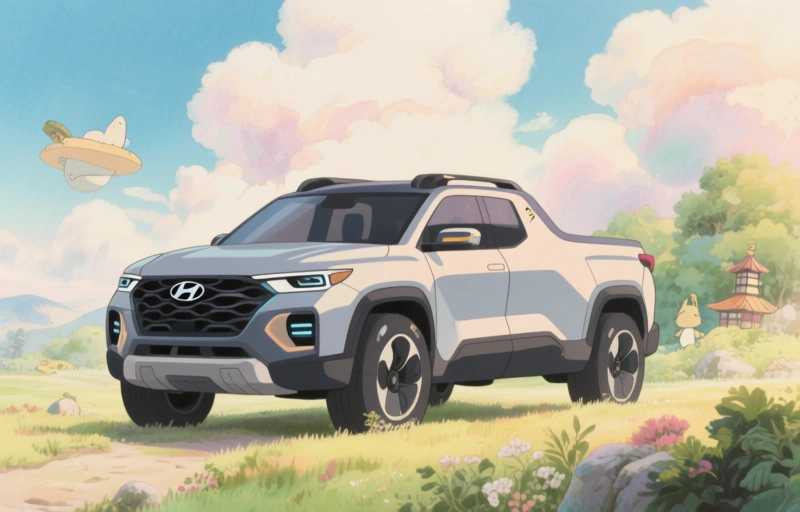
Hyundai has reportedly halted plans to refresh the Santa Cruz pickup, signaling a potential model phase-out and shift toward developing a larger truck, with major implications for recall tracking and safety compliance.
So, here's what we're hearing from the industry chatter. The Hyundai Santa Cruz, that compact pickup that hit the scene in 2021 and got its mid-cycle refresh just last year in 2025, was apparently lined up for another update. The word was we'd see it as soon as next year. But now? That plan is reportedly off the table entirely. It's a significant shift in strategy that has a lot of us in the recall and compliance world paying close attention.
When a manufacturer makes a move like this—halting a planned refresh for a relatively young model—it sends ripples through the entire product lifecycle. For professionals like us, it changes the calculus on everything from parts availability to service bulletins and, of course, potential recall campaigns. The decision-making timeline just got a whole lot more compressed.
### What This Means for Recall Tracking
Let's break down why this matters for our day-to-day work. First, a discontinued model or one with a halted update schedule doesn't mean the compliance obligations vanish. Far from it. If anything, the focus intensifies on the existing vehicle population. We need to be even more vigilant about tracking issues on the 2021-2025 model years, knowing there won't be a new batch of vehicles entering the market with potential fixes or revisions baked in from the factory.
It also puts pressure on the supply chain for specific parts. If Hyundai is pivoting resources toward developing a larger truck, as the reports suggest, then sourcing components for Santa Cruz repairs could become more challenging down the line. That's a key factor in recall remedy planning that we have to anticipate now.
### The Rumor of a Bigger Hyundai Truck
The other half of this story is the talk about Hyundai developing a larger truck. This is the natural pivot. If they're stepping back from the compact pickup segment, the logical move is to target a more traditional, full-size market. But launching a new platform, especially in the truck segment, is a massive undertaking with its own unique set of compliance hurdles.
- **New Platform, New Unknowns:** A completely new truck means new engines, new transmissions, new electrical architectures. Every new component is a new potential failure point that hasn't been road-tested at scale. Our defect trend analysis for this hypothetical model would start from zero.
- **Supplier Shake-up:** A larger truck likely means working with different suppliers or demanding new specifications from existing ones. Any change in the supply chain introduces variability, which is always a red flag for quality control and, by extension, recall risk.
- **Manufacturing Learning Curve:** Ramping up production on a new vehicle, particularly in a competitive segment, often leads to early-build issues. Those first few months of production are critical for monitoring warranty claims and early field reports.
As one industry veteran recently noted, *"A product plan change isn't just a headline; it's a thousand new data points for the safety and compliance teams."* That sentiment really hits home here.
### Strategic Implications for Safety Professionals
So, what do we do with this information? It's not just industry gossip. It's actionable intelligence. This shift likely means Hyundai's engineering and quality resources are being reallocated. The team that would have been working on the Santa Cruz refresh is probably now deep in the development phase of this new, larger truck.
That has a direct impact. Attention diverted to a new project can sometimes mean less bandwidth for addressing emerging issues on existing models. It's our job to ensure that doesn't translate to a gap in safety responsiveness. We need to be proactive in our communications and ensure the recall and service campaign pipeline for the Santa Cruz remains a priority, even if the marketing focus has shifted.
Furthermore, we should start building our knowledge base on full-size truck common failures now. What are the typical pain points for the established players in that segment? Understanding those patterns will help us ask the right questions and spot potential issues early if and when Hyundai's new truck arrives.
In the end, this isn't just about one model being potentially phased out. It's about reading the strategic tea leaves of an automaker. A move away from the Santa Cruz and toward a bigger truck tells a story about market priorities, resource allocation, and future risk areas. For professionals tasked with keeping vehicles safe, that story is the most important one to understand. It allows us to predict where the next challenge might come from and be ready for it, ensuring that regardless of what's in the showroom, what's on the road remains safe.