Ford Recalls Over 119K Vehicles for Engine Heater Fire Risk
William Miller ·
Listen to this article~4 min
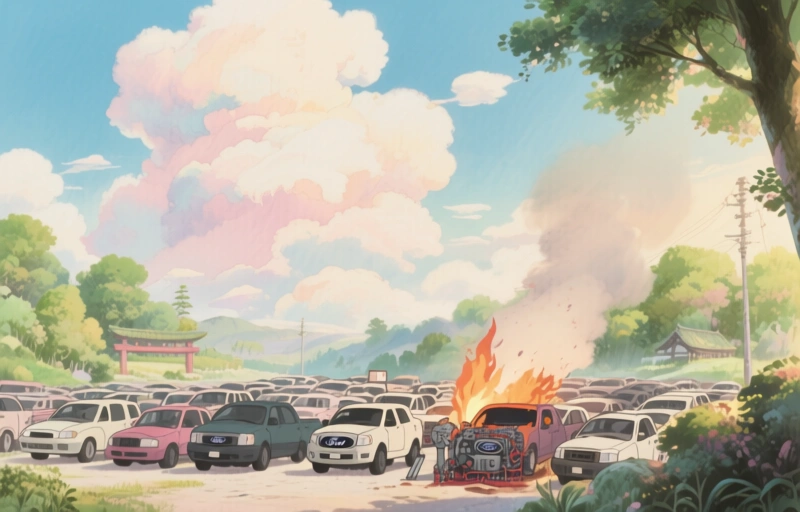
Ford issues a major safety recall for over 119,000 vehicles due to a fire risk from a faulty engine block heater. NHTSA warns the short-circuit hazard exists even when the car is off.
If you're a recall professional, you know the drill. But sometimes, a recall comes along that makes you pause and really think about the domino effect. Ford's latest safety action is one of those. The National Highway Traffic Safety Administration (NHTSA) has announced a recall affecting over 119,000 vehicles. The culprit? A faulty engine block heater that poses a significant fire risk.
It's not just a small batch of cars, either. We're talking about a substantial number of vehicles that could potentially catch fire, even when parked and turned off. That's the kind of scenario that keeps safety analysts up at night. Let's break down what we know so you can get the full picture.
### What's the Core Issue?
The problem centers on the engine block heater's electrical cable. In certain conditions, this cable can short-circuit. When that happens, it can overheat. And overheating, as we all know, can lead to a thermal event—a fire. The risk is present regardless of whether the vehicle is in operation. A car sitting quietly in a garage could become a hazard.
This isn't Ford's first rodeo with this component, which adds another layer to the analysis. It points to a potential systemic issue in the supply chain or design that needs a deeper look. For professionals managing fleet safety or dealership operations, this recall requires immediate and careful attention.
### Which Models Are Affected?
The recall spans multiple model years and vehicle types, primarily focusing on popular SUV and sedan lines. While the official documents list the specific VIN ranges, the affected models are core parts of Ford's lineup from recent years.
- Various Ford SUV models
- Several Ford sedan models
- Model years primarily from the last half-decade
You'll need to check the official NHTSA recall notice (SAFETY RECALL 24S24) for the complete and definitive list of included Vehicle Identification Numbers. Don't rely on model name alone; the VIN is king for verification.
### The Professional's Next Steps
So, what does this mean for your workflow? First, identification is key. You need to cross-reference this recall against any vehicles in your purview. Second, communication. Owners of these vehicles need to be informed clearly and without causing unnecessary panic. The message is straightforward: stop using the engine block heater immediately and schedule a repair.
Ford's remedy involves dealerships inspecting the heater cable and replacing it with a new, redesigned part free of charge. The repair is relatively straightforward, but the logistical challenge of contacting over a hundred thousand owners is immense. That's where recall management strategy comes into play.
As one industry analyst recently noted, *"Recalls of this scale are less about the fix and more about the execution. Getting the right part to the right dealer and the right customer at the right time is the real test."* It's a complex orchestration of parts, people, and information.
### Looking at the Bigger Picture
This recall, while significant, fits into a broader narrative of increased electronic component scrutiny. As vehicles get more complex, the failure points multiply. An engine block heater might seem like a simple accessory, but its integration into the vehicle's electrical system makes it a critical safety item.
For professionals, this is a case study in proactive monitoring. It underscores the importance of tracking component failures across models and model years to identify patterns before they escalate into large-scale recalls. The data from early warranty claims on this heater cable likely told a story that led to this action.
Staying ahead means connecting those dots. It means understanding that a single faulty cable in one model year can indicate a problem for hundreds of thousands of vehicles down the line. Your role is crucial in that chain of awareness, making sure the right actions are taken to keep drivers safe and maintain trust in the process.