Ford Recalls 857K EcoBoost Vehicles Over Engine Fire Risk
William Miller ·
Listen to this article~4 min
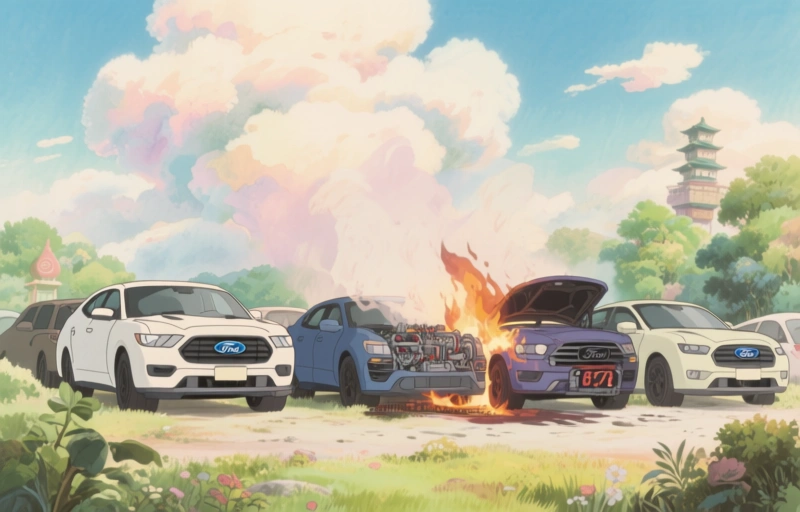
Ford recalls 857,794 Kuga, Bronco Sport, and Escape models with 1.5L EcoBoost engines due to a cracked fuel injection valve that can leak and create a fire risk. Vehicles were built from late 2018 to mid-2024.
Hey there, fellow recall pros. Let's talk about a big one that just landed. Ford's issuing a major safety recall affecting over 850,000 vehicles. It's one of those situations where a small component failure could lead to a very serious outcome. We're looking at a potential fire risk, and that's something that always gets our full attention.
### The Scope of the Ford Recall
Here's the breakdown. Ford is recalling 857,794 vehicles equipped with the 1.5-liter EcoBoost Dragon engine. The models involved are pretty popular ones:
- Ford Kuga
- Ford Bronco Sport
- Ford Escape
The manufacturing window is specific. We're talking about vehicles built between November 19, 2018, and May 28, 2024. If you're working on this case, that's your date range to focus on. It's a wide span, which tells us this isn't a one-off production batch issue.
### Understanding the Technical Defect
So, what's actually going wrong? The problem centers on the high-pressure fuel injection valve. In simple terms, this valve can crack. When it cracks, fuel can leak out. Now, here's the critical part. That leaking fuel doesn't just drip to the ground. It accumulates on the top of the engine, right in the hot zone.
You can probably see where this is heading. Fuel plus a hot engine surface is a dangerous combination. It significantly increases the risk of an engine compartment fire. Ford's investigation found that the crack can develop over time, meaning it might not be apparent in brand-new vehicles. This is a wear-and-tear type failure that manifests with use.
### What This Means for Vehicle Owners
For the owners of these Kuga, Bronco Sport, and Escape models, the immediate instruction is clear. They should park their vehicles outdoors and away from structures until the repair is completed. It's the standard precaution for any fire-related recall, but it's never a message people want to hear. Dealers have been notified, and the official recall process is rolling out.
The fix, once available, will involve inspecting and likely replacing the faulty injection valve. Ford will cover all costs, of course. The challenge, as we all know, will be parts availability and scheduling nearly 858,000 service appointments. Logistics on this scale are never simple.
### A Note on the EcoBoost Dragon Engine
This recall puts a spotlight on the 1.5-liter EcoBoost Dragon engine. It's a powertrain Ford has used extensively to meet efficiency targets. A recall of this magnitude for a core engine component is a significant event. It will undoubtedly trigger deeper internal reviews and possibly influence future design protocols. As one industry analyst recently noted, "Precision engineering in modern engines leaves little margin for error. A single component can have widespread consequences."
### Key Takeaways for Professionals
For us working in the recall space, this Ford action is a textbook case study. It highlights several important points:
- **Component Criticality:** A seemingly small valve can create a major safety hazard.
- **Latent Defects:** The failure develops over time, complicating detection.
- **Scale Management:** Coordinating a remedy across three models and six model years is a massive operational task.
It's a reminder to always dig into the root cause, not just the symptom. A cracked valve is the symptom; the material specification, manufacturing process, or thermal cycling tolerance might be the root. Those are the questions that lead to permanent solutions.
Staying ahead of these issues means understanding the engineering as well as the logistics. This Ford recall will keep teams busy for months, and it's a situation worth watching closely as the remedy campaign unfolds.