Ford Recalls Over 100K Vehicles for Engine Heater Fire Risk
William Miller ·
Listen to this article~5 min
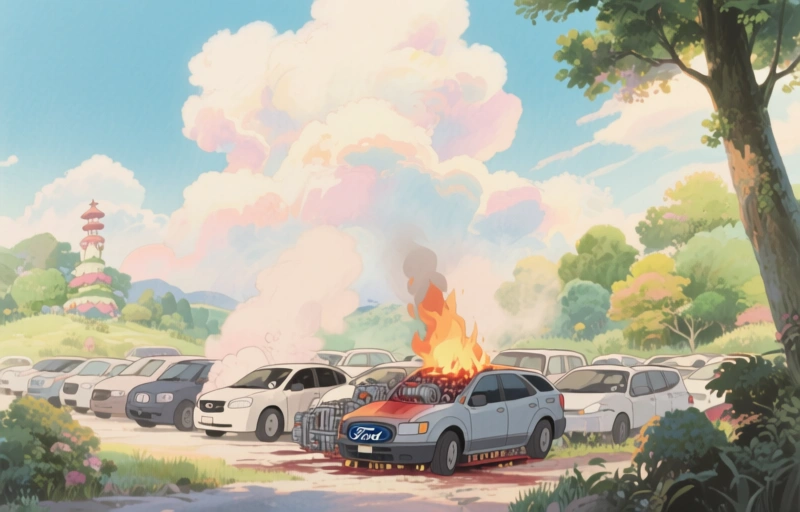
Ford issues a major safety recall for over 100,000 Escape and Corsair SUVs due to an engine block heater fire risk. The electrical short hazard exists even when the vehicle is off, requiring immediate professional attention.
Hey there. If you're dealing with Ford recalls this week, you've probably got a new batch of vehicles on your list. It's not a small one either. We're looking at well over a hundred thousand units flagged for a serious fire risk.
It's one of those issues that makes you pause. The problem centers on the engine block heater. You know, that component that's supposed to make cold starts easier. In this case, it's doing the opposite of its job in the worst possible way.
### What's the Core Issue?
The National Highway Traffic Safety Administration (NHTSA) has been clear. The recall involves a potential electrical short in the engine block heater cable. It doesn't take much imagination to see where this is headed. A short can lead to overheating, which in turn can lead to a fire. And we're not just talking about when the vehicle is running.
That's the scary part. This fire risk is present even when the car is parked and turned off. It's a silent threat sitting in driveways and garages. For professionals like us, that changes the urgency level significantly. It's not just an operational defect; it's a dormant hazard.
### Which Models Are Impacted?
The numbers from various reports have been fluctuating slightly, but the scope is consistent. We're dealing with a major recall spanning specific model years. Here's what you need to know right now:
- The recall primarily targets certain Ford Escape and Lincoln Corsair SUVs.
- The affected model years are from the 2020 through 2023 production cycles.
- The total number is substantial, with figures reported between 116,000 and 119,000 vehicles.
The variance in the final count is typical as VINs are fully audited. The important takeaway is the scale. This isn't a niche problem. It's a widespread safety campaign that will require significant logistical planning from dealerships and corporate.
### Why This Recall Feels Different
There's a quote from one industry analyst that stuck with me. They called it "a recall nightmare spilling into 2026." That phrasing captures the lingering anxiety these electrical fire risks create. It's not a simple software patch or a bolt replacement.
These recalls have a long tail. They erode consumer confidence in a way that's hard to measure. For every owner who gets the notice, there's a moment of doubt about their vehicle's fundamental safety. That's a heavy burden for a brand to carry.
From our professional standpoint, the remediation isn't overly complex, but it is critical. The fix involves inspecting the engine block heater cable and its connection. If any damage or degradation is found, the entire cable assembly must be replaced. It's a straightforward repair, but the volume makes it a formidable task.
### The Professional's Checklist
If you're managing this on the ground, your focus should be on communication and triage. Owners need clear, immediate instructions. The first step is always to stop using the block heater. That's non-negotiable. The next is to schedule the inspection without delay.
We've seen this pattern before. The initial response wave is crucial. A well-organized dealer network can mitigate a lot of the negative fallout. Transparency about the wait times for parts, especially if there's a supply chain hiccup, is better than radio silence.
What's interesting here is the component itself. The engine block heater is often an add-on or a cold-climate package item. That means the recall isn't uniform across all vehicles of those models. It adds a layer of complexity to identifying every single affected unit.
### Looking at the Bigger Picture
This recall doesn't exist in a vacuum. It's part of a larger narrative about vehicle electrification and complexity. As cars get more electrical components, the potential failure points multiply. A simple heater cable today might be a sensor network tomorrow.
For us in the recall field, it's a reminder to stay sharp on electrical systems. The diagnostics are changing. The tools are evolving. Keeping up isn't just about reading bulletins; it's about understanding a new generation of vehicle architecture.
So, take a deep breath. Grab your coffee. This is another big one to manage. The key is systematic action, clear customer communication, and meticulous documentation. It's what we do, even when the news feels like a broken record. The goal remains the same: get every single vehicle fixed, and make the roads a little safer.