BMW Recalls 90,000 Vehicles: Engine Starter Fire Risk
Wouter Smit ·
Listen to this article~4 min
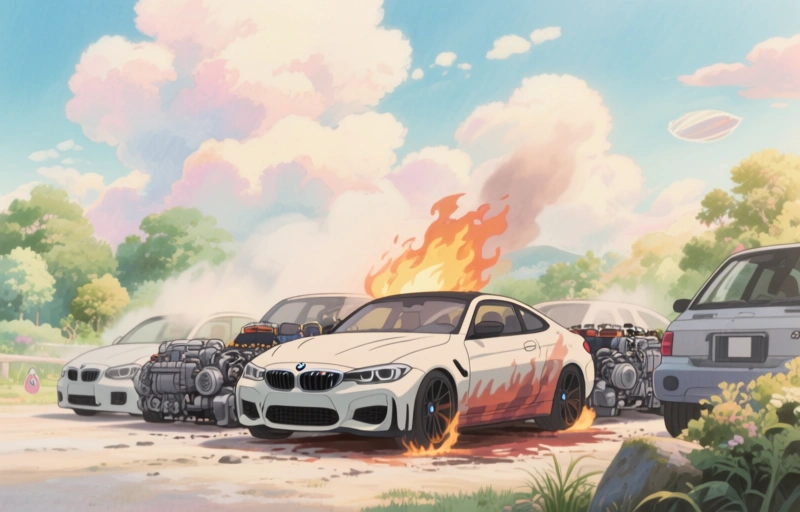
BMW issues a major safety recall for 90,000 U.S. vehicles due to an engine starter defect that poses a fire risk. Learn which models are affected and the critical steps for professionals.
Hey there. If you're in the car recall business, you've probably seen the alert come across your desk. BMW just announced a major recall affecting nearly 90,000 vehicles in the United States. The reason? A potential fire risk tied to the engine starter.
That's not a small number. We're talking about a serious safety issue that requires immediate attention from professionals like you. Let's break down what this means, why it matters, and what steps you should be considering right now.
### What's the Core Problem?
The National Highway Traffic Safety Administration (NHTSA) filing points to a defect in the engine starter motor. In certain conditions, the starter's electrical connection can overheat. This overheating can lead to melting components, smoke, and in the worst cases, an under-hood fire.
Think of it like a faulty electrical outlet in your home that starts to smolder. It might work fine for a while, but the risk is always there, waiting for the right (or wrong) conditions to spark a problem. For vehicle owners, that's a terrifying prospect, especially when parked in a garage overnight.
### Which Models Are Affected?
The recall isn't for every BMW on the road. It's targeted at specific models from recent years. If you're handling inquiries or repairs, you'll want to focus on:
- 2018-2019 BMW 330i sedans
- 2018-2019 BMW 530i sedans
- 2019 BMW X3 sDrive30i SUVs
- 2019 BMW X4 xDrive30i SUVs
These vehicles all share a common four-cylinder engine architecture where the starter issue has been identified. It's a classic case of a single component flaw propagating across a model line.
### The Professional's Action Plan
So, what do you do with this information? First, don't panic. Recalls are a standard part of the automotive lifecycle, but they require a meticulous, organized response.
Owners of these vehicles will be notified by mail starting in late November. The remedy is a software update for the engine control unit. Yes, a software patch. It's designed to monitor the starter's electrical system and prevent the overheating condition from occurring in the first place.
As one industry insider recently noted, "Modern vehicle recalls are increasingly a blend of hardware awareness and software solutions. It's less about swapping a physical part and more about intelligent system management."
Your role is crucial here. You need to:
- Ensure your service department is prepped for the software update procedure.
- Train staff to clearly communicate the risk to concerned owners—no sugar-coating, but no unnecessary alarmism either.
- Have a process for checking VINs against the recall database quickly. Time is of the essence when safety is involved.
### Why This Recall Stands Out
You see recalls for airbags, for brakes, for fuel pumps. A starter fire risk feels different. It hits on a primal fear for car owners: the vehicle catching fire, potentially while unattended. The psychological impact is significant, which means customer communication needs extra care.
Furthermore, this isn't a problem that announces itself with a warning light or a strange noise. It could be silent until it's not. That makes proactive identification and correction absolutely critical. You're not just fixing a car; you're providing peace of mind.
### Looking at the Bigger Picture
This BMW situation is a reminder of how interconnected modern vehicle systems are. A starter isn't just a starter anymore; it's a node in a complex electrical network. A flaw in one area can have cascading effects.
For recall professionals, the takeaway is to stay agile. The tools and solutions are evolving. Today it's a software update for a starter, tomorrow it might be an over-the-air patch for a battery management system. Our job is to adapt, to understand the new landscape, and to guide consumers through it safely.
In the end, a recall like this, while challenging, reinforces the vital importance of our work. We're the line between a potential hazard and a safe vehicle on the road. Let's make sure we get this one right.